
Sight-loss support for people. Better sensory practice for services.Choose the right route →
Specialist sight-loss support

For individuals and organisations

Stop guessing what good support should look like.

Whether sight loss is changing everyday life or your organisation needs to improve its practice, we turn unclear problems into practical, achievable next steps.

A man with sight loss using a tablet at home with a mug and printed information beside him

A clearer starting point

Find the level of support that fits

These short checks help people identify the pattern of a difficulty and help organisations test what they can genuinely evidence.

A man using a magnifier and task light to read at homeFor individuals and families

Everyday Sight-Loss Impact Check

Ten questions covering daily living, personal care, information, technology, lighting, safety, indoor movement and confidence. The result points towards free resources, one-issue advice or an assessment.

Take the individual check
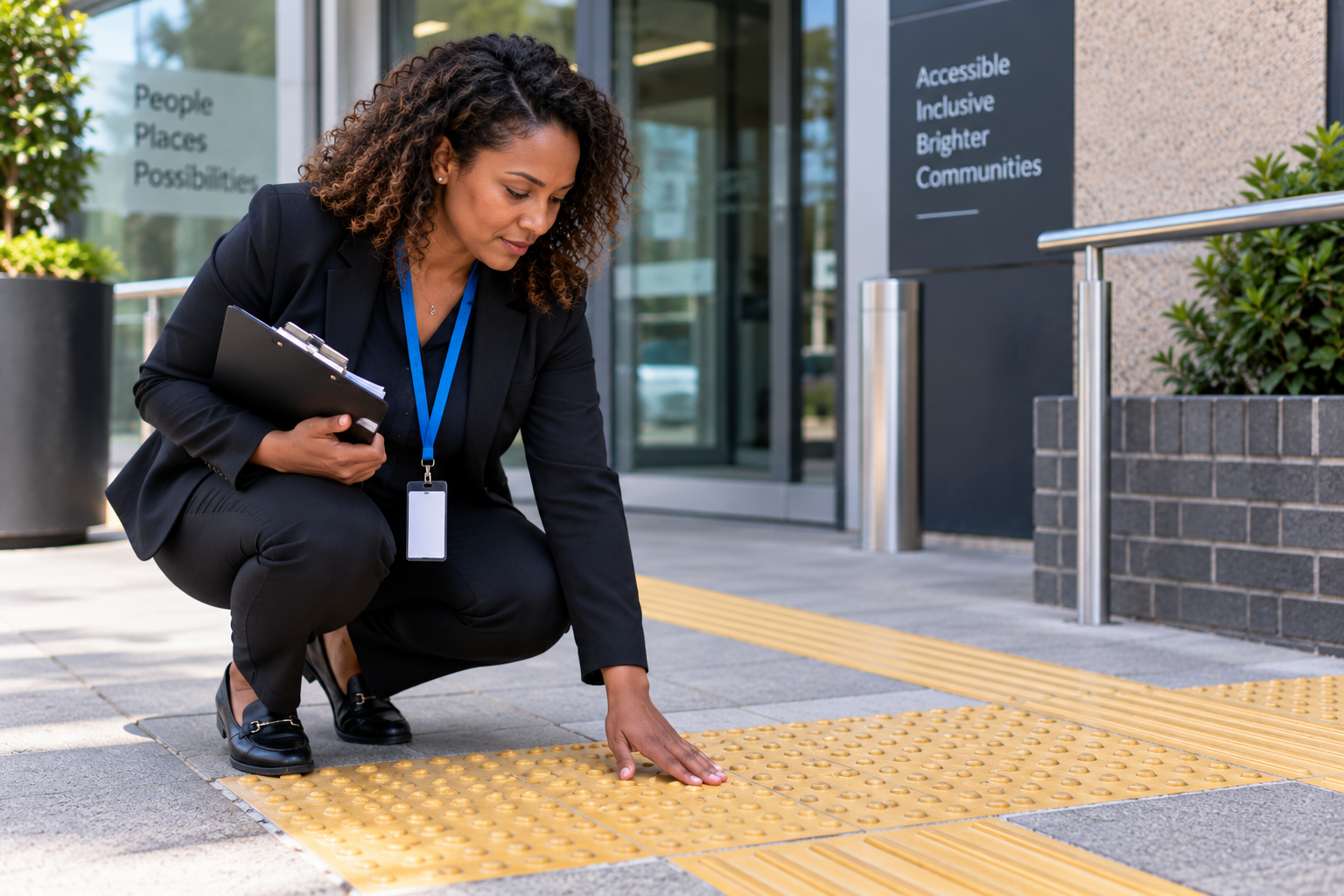

A professional carrying out an accessibility review of tactile pavingFor organisations

Sight-Loss Support Readiness Scorecard

Fifteen tick-box questions about identifying needs, accessible information, staff practice, risk, records, feedback and leadership oversight.

Take the organisation scorecard

When support is unclear

Small barriers become bigger problems.

For people

Everyday tasks start taking over

Cooking, personal care, reading information, identifying items or using technology can become tiring, risky or frustrating.

For families

Everyone wants to help, but nobody has a plan

Advice arrives in pieces. Equipment is purchased without knowing whether it addresses the real priority.

For services

Awareness exists, but practice is inconsistent

Policies mention inclusion, yet staff still lack clear steps, evidence and confidence in real situations.

What better support makes possible

Know what needs to change next, and why.

Clarity

Understand the actual barrier rather than treating the symptom.

Priority

Focus time and money where they can make the greatest difference.

Action

Turn specialist insight into realistic steps people can follow.

Evidence

Record what was identified, recommended and improved.

How we work

We are problem solvers.

Sensory Visionaries begins with the outcome a person or organisation needs. We then work backwards to understand what is getting in the way.

For an individual, that may mean one focused written answer or a whole-person assessment. For an organisation, it may mean examining the service journey, documents, staff practice and accountability.

Awareness matters. Implementation is what changes everyday experience.

A woman using a smartphone to access practical information
The level of support should match the problem: one issue, several connected difficulties or a service-wide gap.

Experience in practice

Practical evidence, not empty promises

These examples reflect professional work delivered by our founder across statutory vision-rehabilitation and service-improvement settings. Identifying details are removed. They are evidence of experience, not invented customer quotations.

Individual outcome

From unsafe kitchen tasks to a workable routine

Assessment linked the person’s real difficulties to practical techniques, task sequencing and equipment such as a talking microwave and liquid-level indicator.

What changed: clearer routines, safer task completion and recommendations the person could understand and use.

Service outcome

From an inherited backlog to risk-led priorities

Inherited waiting-list work included cases dating back to 2021. Through risk-based triage, clearer responses and coordinated case progression, the oldest year represented on the waiting list moved from 2021 to 2025 within eight months.

What changed: a significantly reduced historic backlog, greater visibility of risk, clearer workflow and more defensible priorities.

Practice outcome

From broad expectations to repeatable practice

Standard operating procedures, staff guidance, assessment documentation and training agreements were developed or strengthened around real service needs.

What changed: staff had clearer steps and leaders had stronger evidence of consistent practice.

How we can help

Support built around the problem in front of you

01

Vision rehabilitation assessment

Explore daily living, personal care, communication, technology, lighting, home safety and confidence, then receive tailored written recommendations.

Explore individual support →

02

Ask one question

Submit one clearly defined sight-loss, practice, accessibility or documentation question. A qualified Vision Rehabilitation Specialist reviews the information, decides the recommendations and provides a focused written response.

See question and answer examples →

03

Organisation review and consultancy

Examine accessibility, service pathways, documents and practice, then receive a prioritised improvement roadmap.

Explore organisation support →

Specialist expertiseQualified vision rehabilitation knowledge
Practical solutionsRecommendations connected to real tasks
Person-centredPriorities shaped around the person or service
Honest boundariesNo outdoor-mobility training; clear signposting where needed
What does “Ask one question” mean?

It is for one defined issue that can be considered safely in writing. Individual responses can include up to five tailored recommendations. Organisation responses focus on one practice, accessibility or documentation issue. If several difficulties connect, we will recommend an assessment or scoped review instead.

Explore Ask a VRS

Help keep practical information open

Support our free resources

If our information has helped you, a voluntary contribution can support the continued development of free sight-loss resources for people who may not be able to afford membership.

Find out how to contribute

Questions people ask

Choose support without pressure

Do I have to know which service I need?

No. The free individual check or organisation scorecard helps identify whether a resource, focused written response, assessment or organisation review is the most sensible route.

How will I receive my result?

Results from the free check and organisation scorecard are sent by email with the recommended next step. A telephone or video appointment only forms part of a paid assessment after suitability has been confirmed.

What if Sensory Visionaries cannot add value?

We do not provide vague information simply to charge a fee. If a one-off Ask a VRS submission cannot receive meaningful specialist value within scope, the fee is refunded. Before an assessment or larger project is paid for, suitability and scope are confirmed.

Do you provide outdoor-mobility training?

No. We can explain the four main cane types and help identify when a local qualified mobility professional is needed, but we do not provide outdoor-mobility, route-specific or hands-on long-cane training.

Start with the real problem

What is becoming difficult, and what needs to be different?

Laptop, notebook and mug on a bright desk

Tell us whether you need support for an individual or an organisation. We will help you identify the most sensible next step.

Submit an enquiry
Sensory Visionaries
Privacy Overview

This website uses cookies so that we can provide you with the best user experience possible. Cookie information is stored in your browser and performs functions such as recognising you when you return to our website and helping our team to understand which sections of the website you find most interesting and useful.