
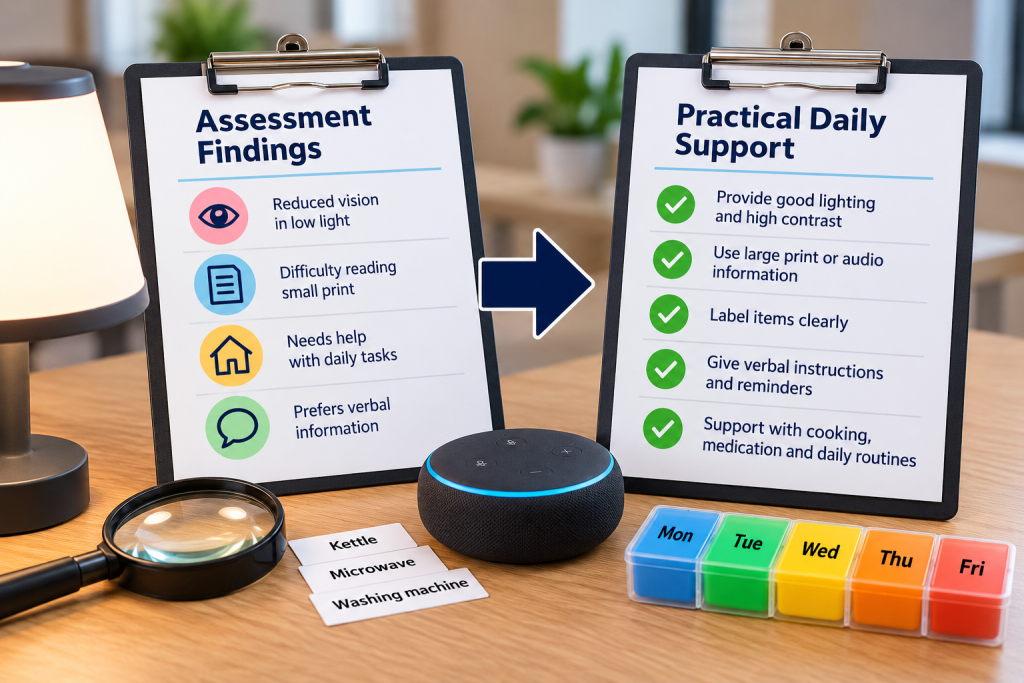
Five points to check
1. Name the exact task that is breaking down
Turn a broad assessment finding into the actual activity that needs changing. For example, replace difficulty at mealtimes with cannot reliably locate a pale cup on the pale table at breakfast.
2. Choose an intervention that matches the barrier
If contrast is the problem, trial contrasting crockery or a placemat. If sequencing is the problem, simplify the setup. If identification is the problem, consider tactile or consistent-position methods.
3. State the least support needed
Describe what the person can do independently and where assistance begins. This reduces unnecessary takeover and makes the plan usable by different staff.
4. Build the method into the real routine
Specify where items are kept, when an adjustment is used and what staff should avoid changing. A technique that only works when one experienced worker is present is not yet embedded.
5. Test the original task again
Ask the person to complete the activity after the change. If safety, independence or confidence has not improved, revisit the barrier rather than repeating an ineffective intervention.
What useful evidence can look like
Useful evidence connects the identified need, the action taken, who was responsible, what happened in practice and the outcome for the person. It should be clear enough for another member of staff to understand and use.
- Need: What was identified and how did it affect the person?
- Action: What practical support or change was agreed?
- Practice: How can the service show that the action happened?
- Outcome: What difference did it make?
- Review: Is it still working and what happens next?
Ask your service: Could another member of staff understand what needs to happen from the evidence you currently hold?