
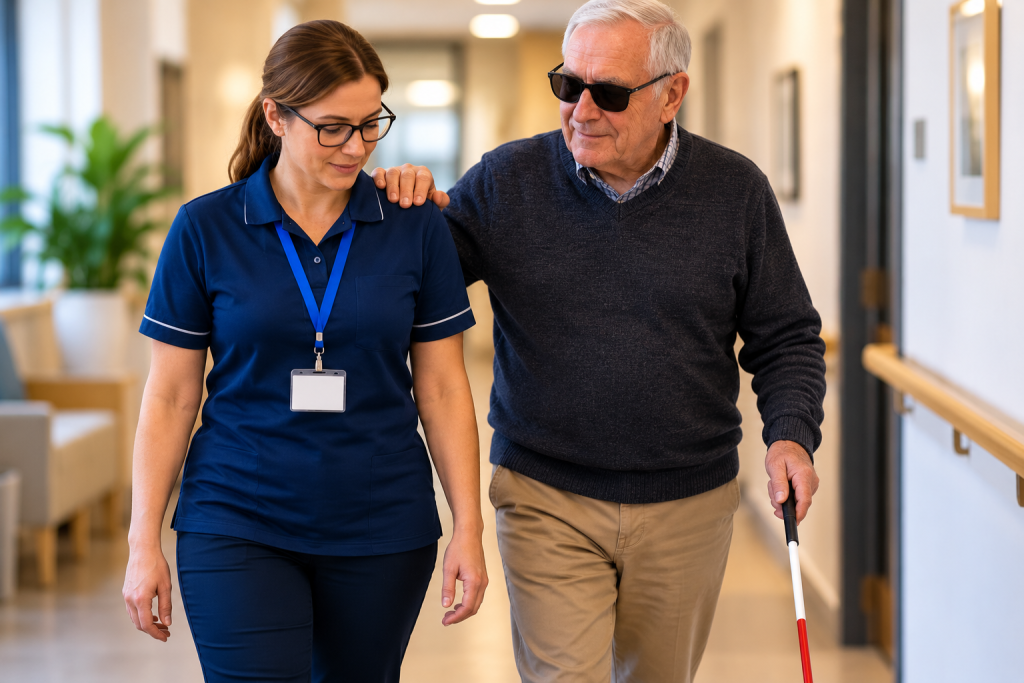
Five points to check
1. Ask before physical contact
Offer assistance and wait for agreement. Do not take an arm, steer someone by the shoulders or move them without warning.
2. Use an appropriate guiding position
Where staff are trained and guiding is appropriate, the person will commonly hold the guide's arm just above the elbow and follow slightly behind. Adapt for individual preference and physical ability.
3. Describe relevant environmental information
Give timely information about steps, doors, narrow spaces, seating and surface changes without overwhelming the person with constant commentary.
4. Replace vague directions with specific ones
Use the chair is one step in front of you or the doorway is on your left instead of over there, this way or watch out.
5. Observe real practice
Include guiding and communication in competency checks or supervision. Correct unsafe habits and arrange specialist practical instruction where hands-on guiding skills are required.
What useful evidence can look like
Useful evidence connects the identified need, the action taken, who was responsible, what happened in practice and the outcome for the person. It should be clear enough for another member of staff to understand and use.
- Need: What was identified and how did it affect the person?
- Action: What practical support or change was agreed?
- Practice: How can the service show that the action happened?
- Outcome: What difference did it make?
- Review: Is it still working and what happens next?
Ask your service: Could another member of staff understand what needs to happen from the evidence you currently hold?