
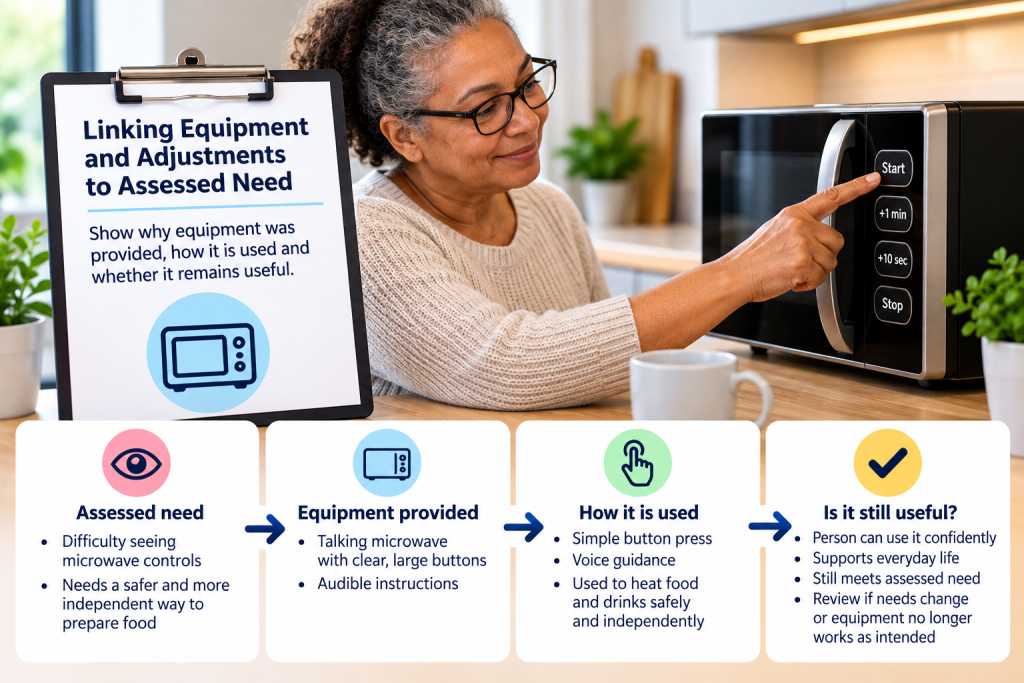
Five points to check
1. Define the task before choosing equipment
A magnifier, lamp, tactile marker or talking device should answer a specific functional problem rather than being issued simply because someone has sight loss.
2. Trial the item in context
Check whether the person can see, hear, position, operate and understand the item where it will actually be used.
3. Record its intended purpose and location
State what the equipment is for and where it should be kept so it is not moved or stored away.
4. Demonstrate the equipment
Show how the item works and allow the person to practise using it in the task for which it was selected.
5. Investigate non-use
If equipment is not being used, check positioning, complexity, confidence, changing vision and whether it actually solved the original problem before assuming it was unwanted.
What useful evidence can look like
Useful evidence connects the identified need, the action taken, who was responsible, what happened in practice and the outcome for the person. It should be clear enough for another member of staff to understand and use.
- Need: What was identified and how did it affect the person?
- Action: What practical support or change was agreed?
- Practice: How can the service show that the action happened?
- Outcome: What difference did it make?
- Review: Is it still working and what happens next?
Ask your service: Could another member of staff understand what needs to happen from the evidence you currently hold?