
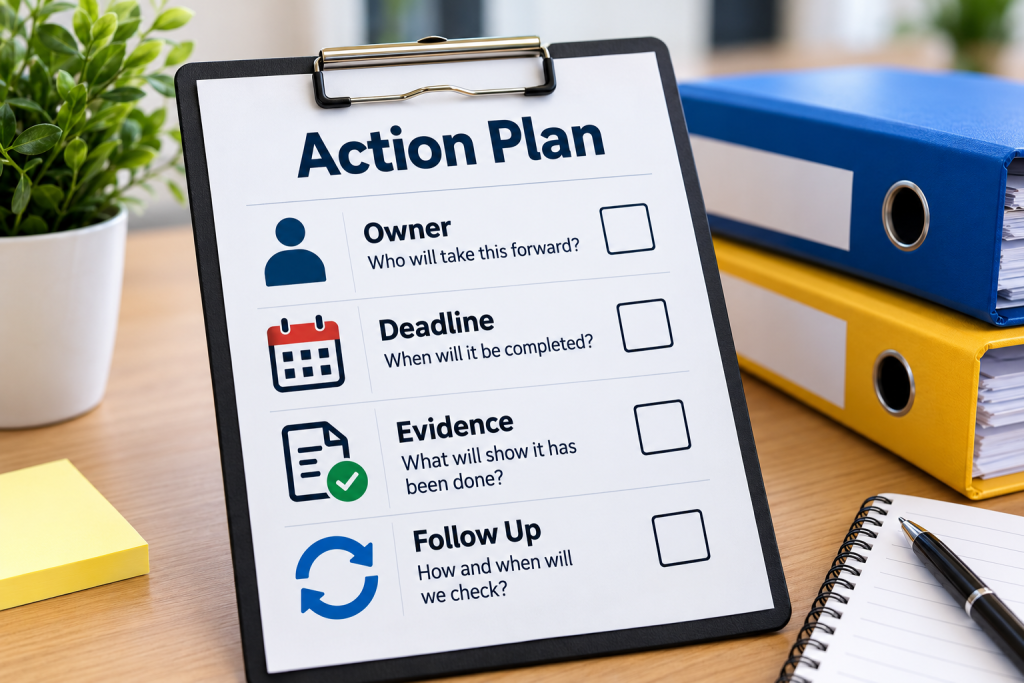
Five points to check
1. Write one observable action
Replace improve accessibility with a concrete task such as update the person's communication preference in both the care record and correspondence system.
2. Give it to someone who can complete it
Assign a named role or person with the authority and system access required. Shared ownership can easily become no ownership.
3. Set the deadline according to risk
An immediate safety issue may need action today while a wider audit improvement can have a longer timescale. Avoid one standard deadline for every issue.
4. Define evidence of completion
Specify what will demonstrate completion, such as an updated plan, environmental change, competency observation or confirmation that an accessible format works.
5. Reopen actions that did not solve the problem
An action can be completed without being effective. If the original barrier remains, record that outcome and agree a different response.
What useful evidence can look like
Useful evidence connects the identified need, the action taken, who was responsible, what happened in practice and the outcome for the person. It should be clear enough for another member of staff to understand and use.
- Need: What was identified and how did it affect the person?
- Action: What practical support or change was agreed?
- Practice: How can the service show that the action happened?
- Outcome: What difference did it make?
- Review: Is it still working and what happens next?
Ask your service: Could another member of staff understand what needs to happen from the evidence you currently hold?