
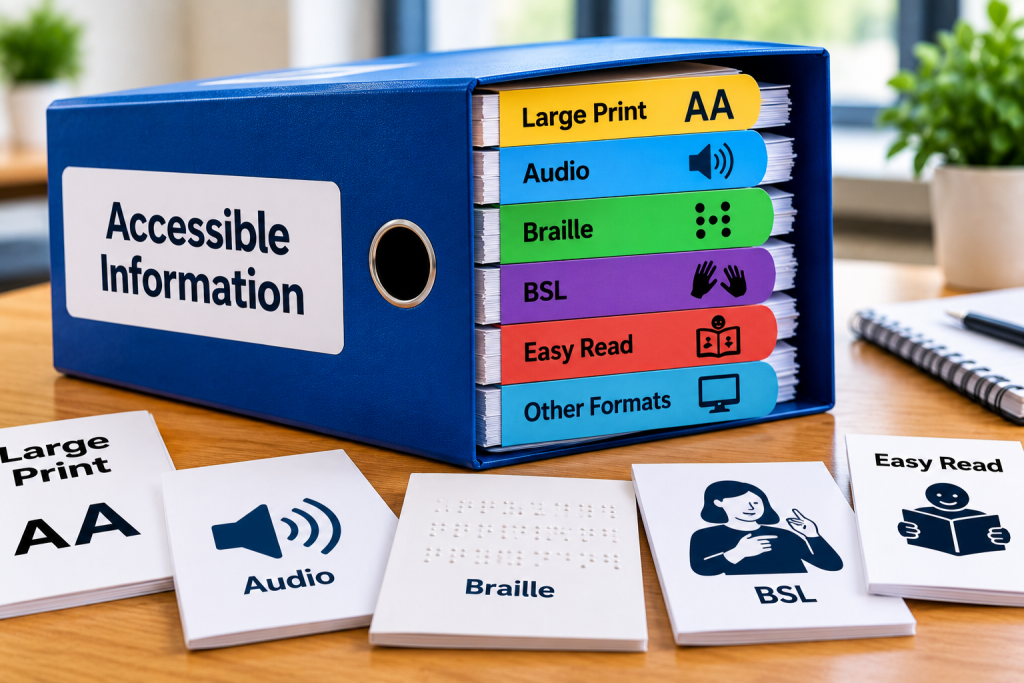
Five points to check
1. Identify the format before first correspondence
Ask how the person prefers to receive information before sending assessment details or appointment letters.
2. Carry the preference between relevant systems
Make the adjustment visible to staff who create communications so the person does not have to repeatedly request the same accessible format.
3. Prioritise important information
Check contracts, appointment changes, financial information and complaints information are available in a format the person can use.
4. Check digital accessibility, not just print
Electronic does not automatically mean accessible. Documents should work with magnification or screen reading, use meaningful structure and avoid image-only text where an alternative is required.
5. Plan accessible handovers and endings
When someone changes team or service, provide key information in the preferred format and pass on relevant accessibility requirements through the appropriate handover process.
What useful evidence can look like
Useful evidence connects the identified need, the action taken, who was responsible, what happened in practice and the outcome for the person. It should be clear enough for another member of staff to understand and use.
- Need: What was identified and how did it affect the person?
- Action: What practical support or change was agreed?
- Practice: How can the service show that the action happened?
- Outcome: What difference did it make?
- Review: Is it still working and what happens next?
Ask your service: Could another member of staff understand what needs to happen from the evidence you currently hold?