

1. Symbol or simple cane
A shorter, lightweight white cane used mainly to identify that the person has sight loss. It is not designed for obstacle detection, mobility training or body-weight support.
Practical cane guide
Different canes identify, protect, detect or support in different ways. The correct choice depends on what the person needs the cane to do.
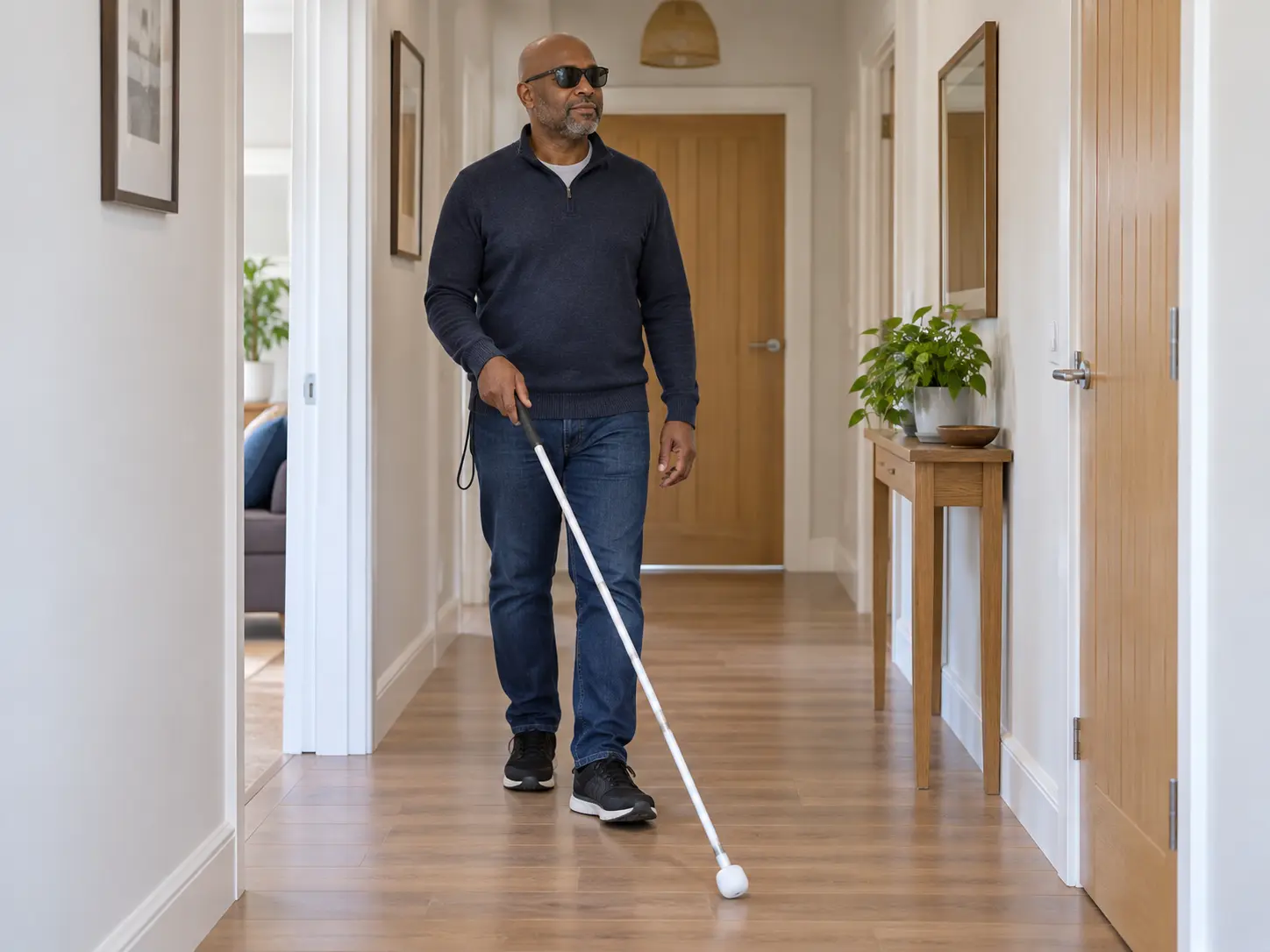
Four common cane types
These four examples show the broad differences between common UK cane types. Exact designs, handles, joints and tips vary by supplier. They are not a substitute for individual assessment, fitting or mobility training.
A shorter, lightweight white cane used mainly to identify that the person has sight loss. It is not designed for obstacle detection, mobility training or body-weight support.
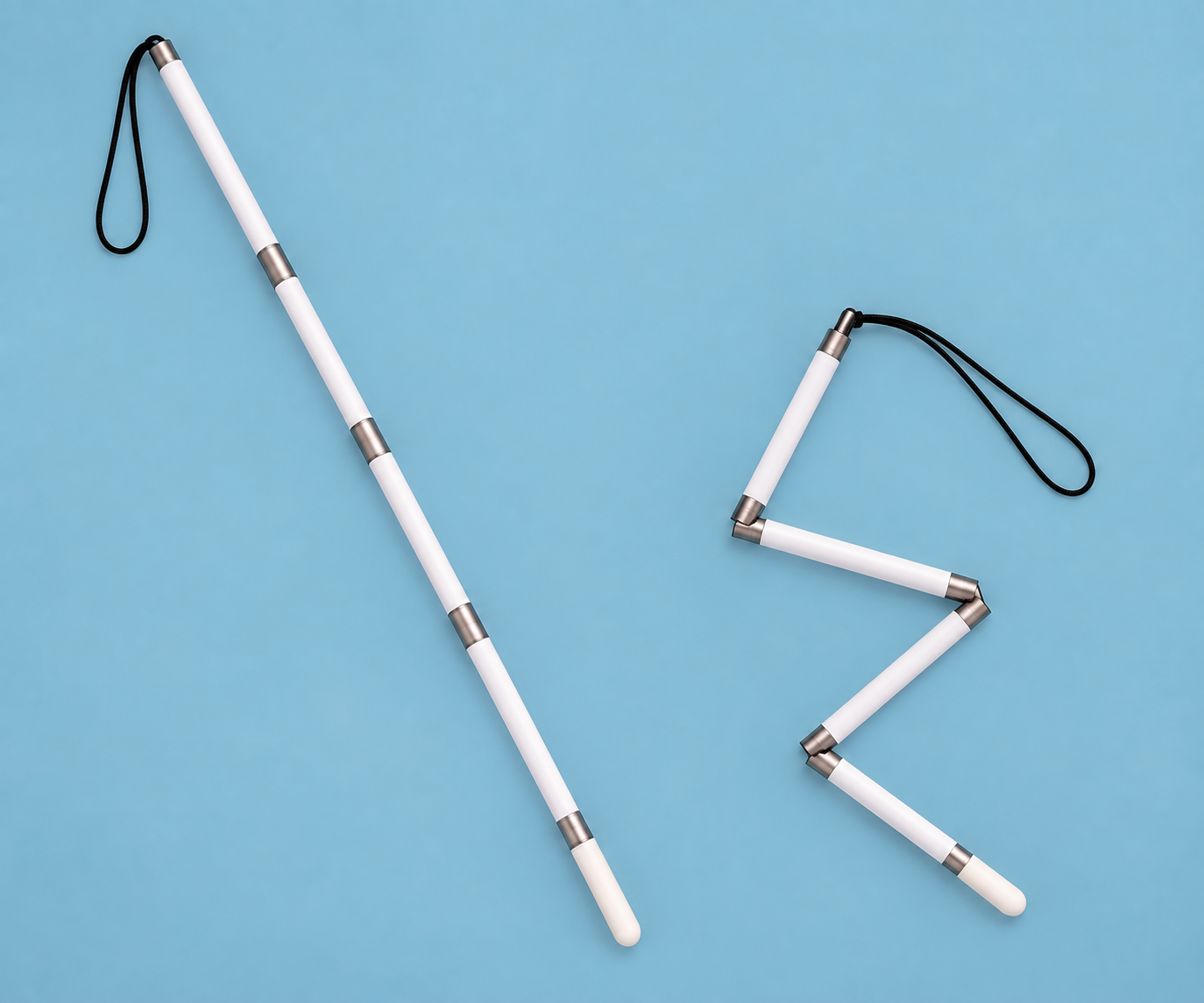
Usually around waist height and held diagonally across the body to identify immediate obstacles, steps and kerbs. It has a smaller reach than a long cane and is not for body-weight support.
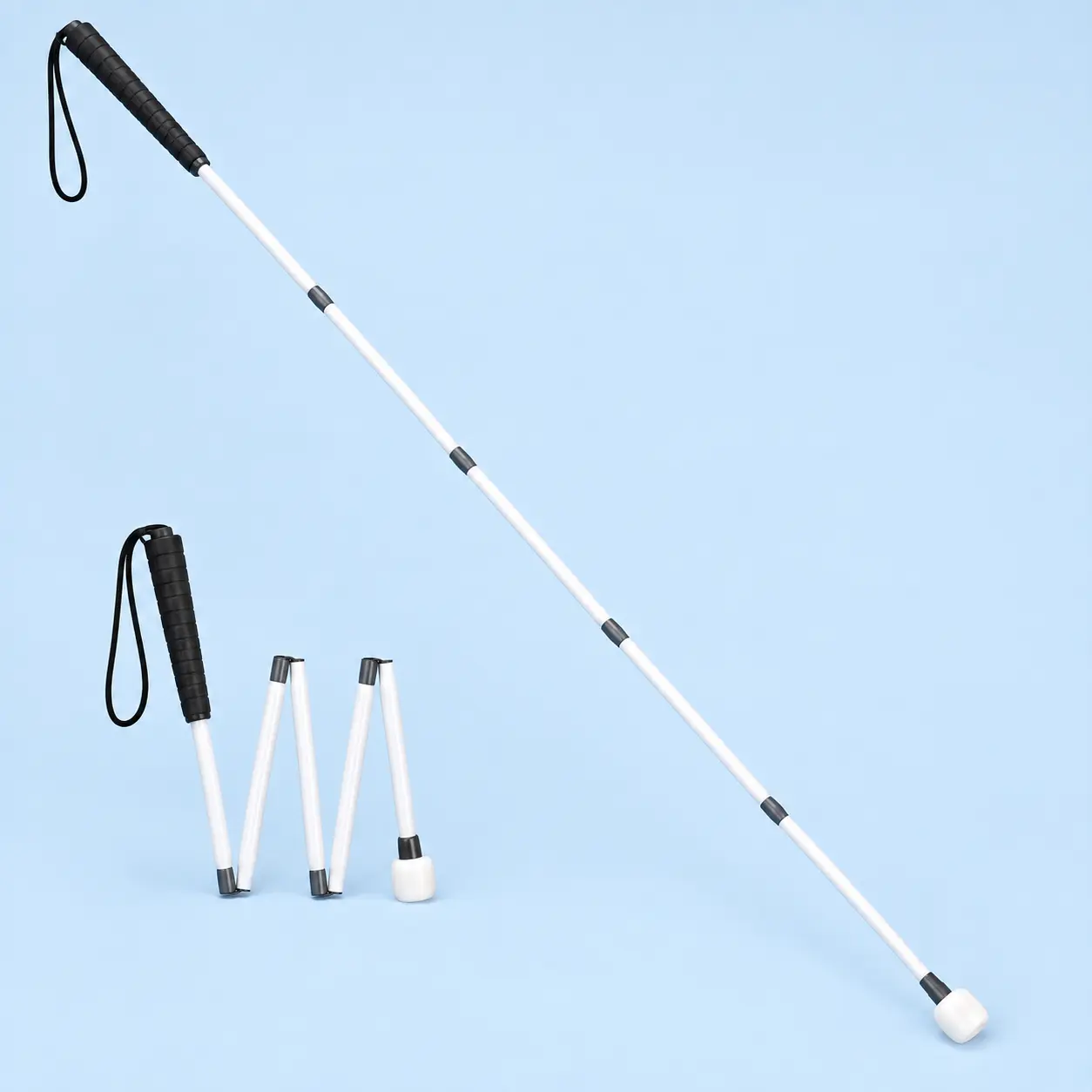
Used to detect obstacles and surface changes further ahead. It is generally around sternum-to-chin height, but the exact length, tip and technique require individual assessment and recognised training.
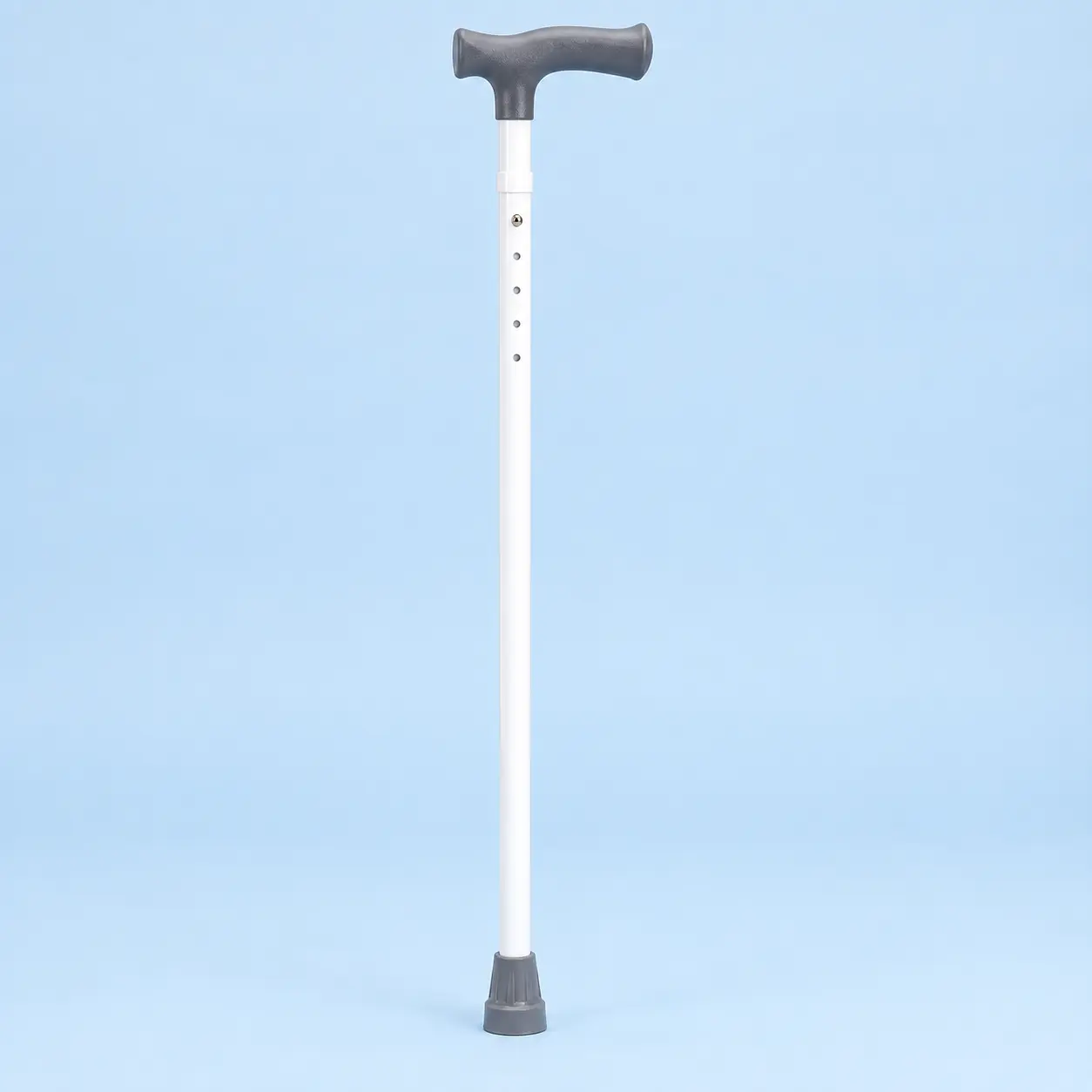
A sturdy white walking stick that provides physical support while also identifying sight loss. Its height and weight-bearing suitability should be checked through an appropriate assessment, often with physiotherapy input.
You may also see red markings on some white canes. In the UK these can indicate combined sight and hearing loss (dual sensory loss). The examples on this page use white canes only, so the four cane types remain clear.