
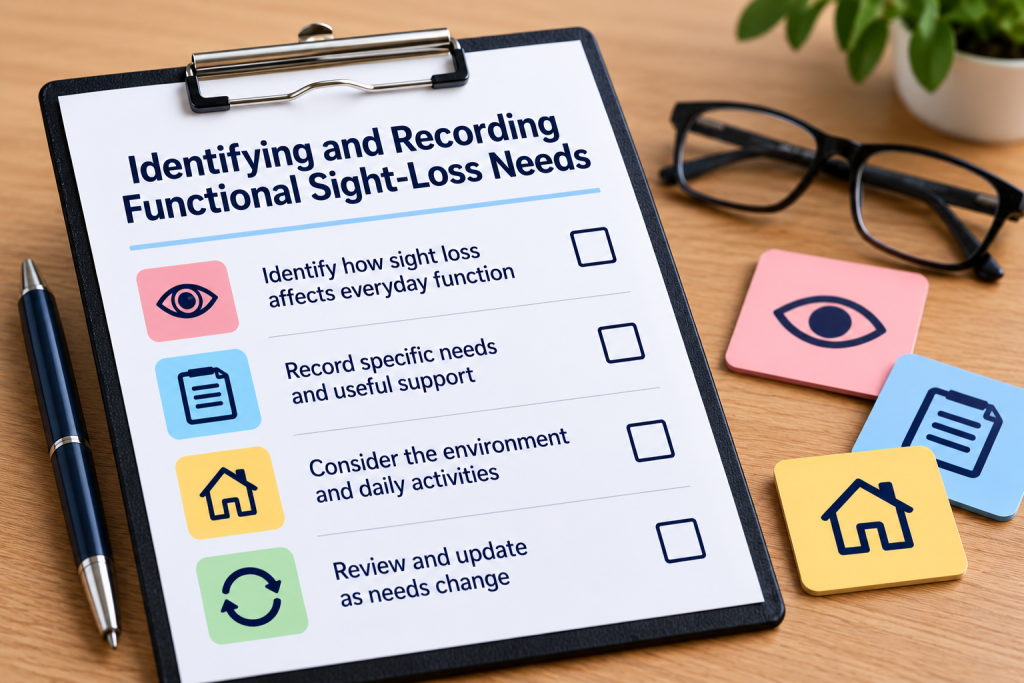
Five points to check
1. Ask about tasks, not just eyesight
Use questions such as: What has become slower, harder or less safe? Which tasks are being avoided? What works differently in bright light, dim light or unfamiliar places? This reveals functional impact without asking staff to diagnose.
2. Separate ability from the conditions around it
Record whether the difficulty changes with lighting, contrast, clutter, fatigue, distance or familiarity. Someone may manage a task in one setting and struggle with the same task elsewhere.
3. Describe what the person actually does
Use observable descriptions such as needs a dark mug against a pale worktop or reads correspondence using phone magnification. Avoid vague labels such as poor vision or needs help.
4. Capture successful strategies as well as difficulties
Record the methods, positioning, equipment or environmental changes the person already uses successfully. These are part of the support plan and help prevent staff replacing independence with unnecessary assistance.
5. Create clear review triggers
Review sooner if there is a fall, new diagnosis, change in medication, noticeable reduction in confidence, new difficulty with familiar tasks or a change of environment. Do not wait for the annual review when function has clearly changed.
What useful evidence can look like
Useful evidence connects the identified need, the action taken, who was responsible, what happened in practice and the outcome for the person. It should be clear enough for another member of staff to understand and use.
- Need: What was identified and how did it affect the person?
- Action: What practical support or change was agreed?
- Practice: How can the service show that the action happened?
- Outcome: What difference did it make?
- Review: Is it still working and what happens next?
Ask your service: Could another member of staff understand what needs to happen from the evidence you currently hold?