
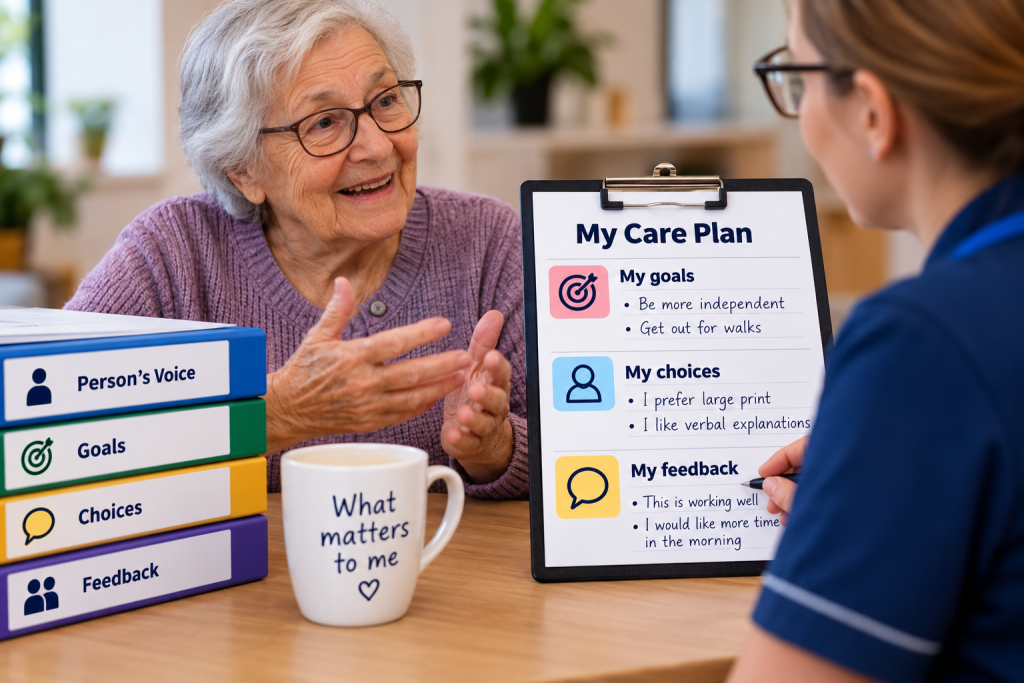
Five points to check
1. Use a goal the person would recognise
Replace generic phrases such as maintain independence with a concrete outcome such as choosing their own clothes or making a morning drink without waiting for staff.
2. Distinguish preference from professional advice
Show separately what the person wants, what staff or specialists recommend and what has finally been agreed.
3. Show how choices were made accessible
Record whether options were explained verbally, demonstrated, provided in large print, presented using objects or given with additional processing time.
4. Capture informed disagreement
If someone declines an adjustment or accepts a known risk, document the discussion, information provided and agreed response rather than labelling the person as difficult.
5. Show what changed after feedback
If a new layout makes items harder to find, show the practical response and whether it improved the situation.
What useful evidence can look like
Useful evidence connects the identified need, the action taken, who was responsible, what happened in practice and the outcome for the person. It should be clear enough for another member of staff to understand and use.
- Need: What was identified and how did it affect the person?
- Action: What practical support or change was agreed?
- Practice: How can the service show that the action happened?
- Outcome: What difference did it make?
- Review: Is it still working and what happens next?
Ask your service: Could another member of staff understand what needs to happen from the evidence you currently hold?