
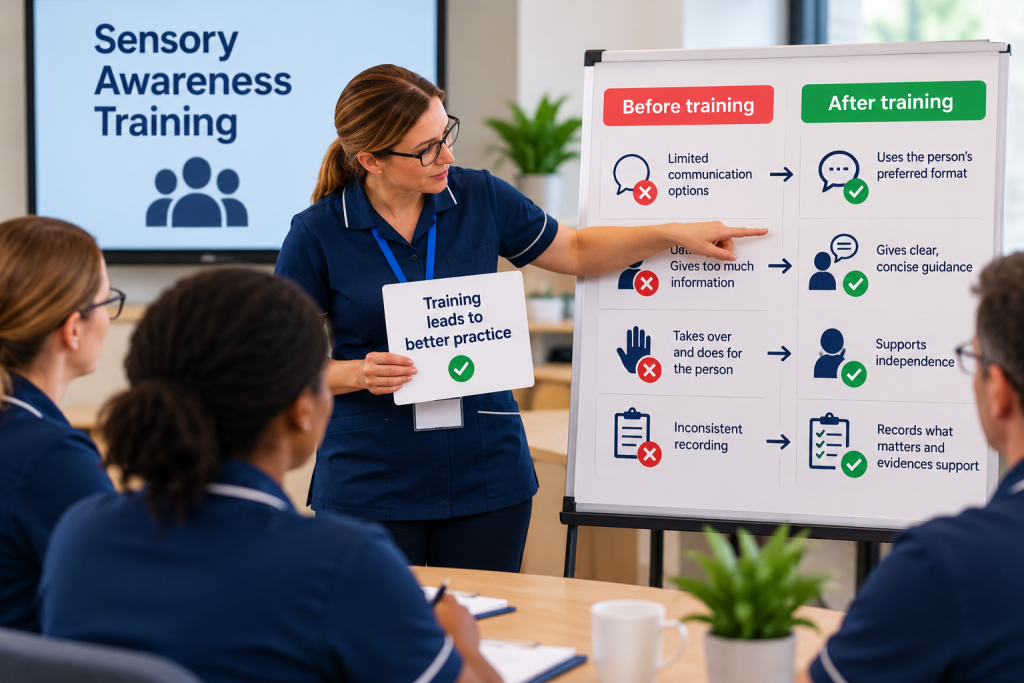
Five points to check
1. Define the behaviour training should change
Decide what staff should be able to do afterwards, such as provide accessible choices, communicate clearly or recognise when a functional concern needs escalation.
2. Use realistic before and after scenarios
A few service-specific questions can show whether understanding improved more meaningfully than attendance alone.
3. Observe practice several weeks later
Check selected behaviours during normal work to see whether learning transferred into practice and where coaching is still required.
4. Use supervision to explore application
Ask for a real example of how learning was used, what was difficult and what the worker would do differently next time.
5. Look for service-user outcomes
Compare relevant complaints, incidents, accessibility failures, audit findings or feedback. Training should improve people's experience, not merely staff confidence scores.
What useful evidence can look like
Useful evidence connects the identified need, the action taken, who was responsible, what happened in practice and the outcome for the person. It should be clear enough for another member of staff to understand and use.
- Need: What was identified and how did it affect the person?
- Action: What practical support or change was agreed?
- Practice: How can the service show that the action happened?
- Outcome: What difference did it make?
- Review: Is it still working and what happens next?
Ask your service: Could another member of staff understand what needs to happen from the evidence you currently hold?