Five points to check
1. Check the environment when the task happens
Lighting conditions change across the day. Review the room, route or activity under the conditions in which the person actually uses it.
2. Look for glare as well as darkness
Bright windows, glossy surfaces, polished floors and exposed lamps can reduce useful vision. Trial blinds, repositioning, diffused light or task lighting instead of simply adding brightness.
3. Put contrast where decisions are made
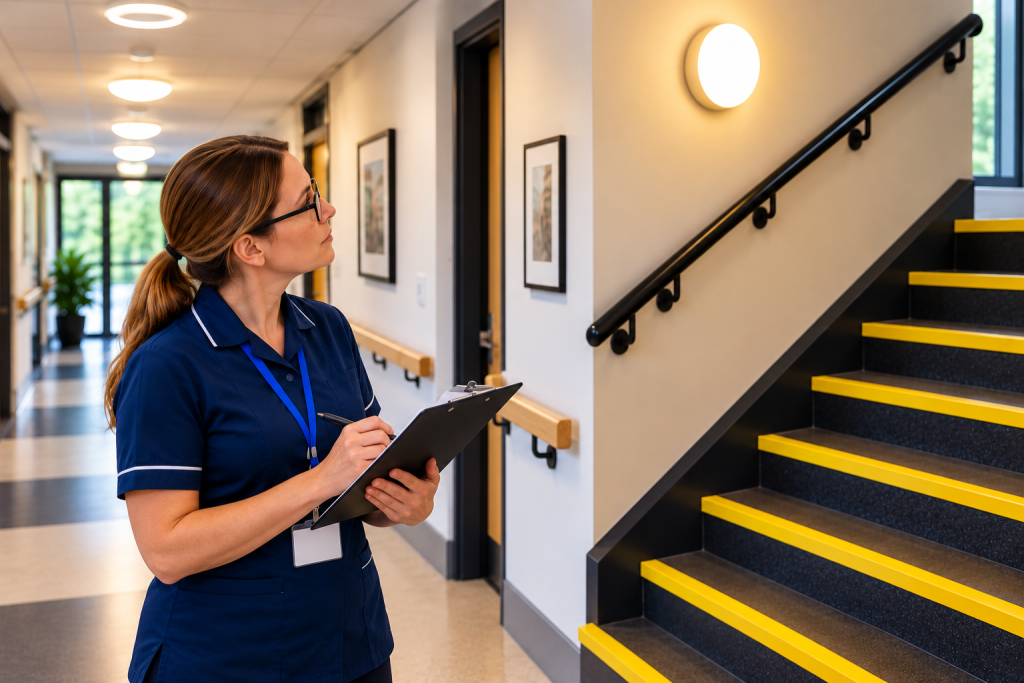
Prioritise edges, handles, switches, crockery, seating, bathroom fittings and changes in level. Contrast should reveal the important feature without creating visual clutter.
4. Protect predictable routes
Keep established routes clear of temporary equipment, bins and moved furniture. When a layout must change, explain it and support familiarisation.
5. Test the adaptation through the actual activity
Ask the person to carry out the task after the change. Adjust lighting, position or contrast according to functional benefit rather than appearance alone.
What useful evidence can look like
Useful evidence connects the identified need, the action taken, who was responsible, what happened in practice and the outcome for the person. It should be clear enough for another member of staff to understand and use.
- Need: What was identified and how did it affect the person?
- Action: What practical support or change was agreed?
- Practice: How can the service show that the action happened?
- Outcome: What difference did it make?
- Review: Is it still working and what happens next?
Ask your service: Could another member of staff understand what needs to happen from the evidence you currently hold?