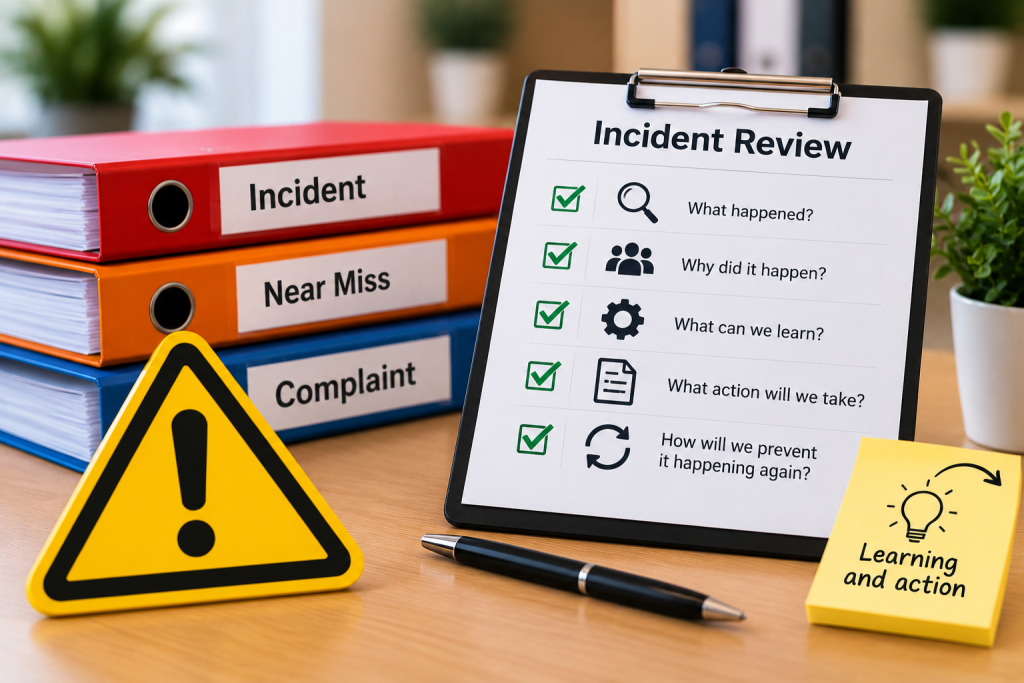
Five points to check
1. Test whether vision contributed to the event
Explore lighting, contrast, layout, accessible information, unfamiliar equipment, staff communication and whether agreed adjustments were in place. Do not automatically blame the impairment.
2. Learn from near misses
Almost taking the wrong item or almost missing a step may reveal the same system weakness as an incident and gives the service a chance to act before harm occurs.
3. Compare the plan with what actually happened
Check whether the need was identified, the action was clear, staff knew about it and the action was followed. This separates assessment gaps from implementation gaps.
4. Match corrective action to the cause
If glare caused the problem, extra supervision may not solve it. If staff missed an accessibility flag, buying equipment may not solve it. Address the actual contributing factor.
5. Spread learning where the risk could recur
Update team briefings, environmental checks, training, policy or audit tools where appropriate, then verify that the change actually happened.
What useful evidence can look like
Useful evidence connects the identified need, the action taken, who was responsible, what happened in practice and the outcome for the person. It should be clear enough for another member of staff to understand and use.
- Need: What was identified and how did it affect the person?
- Action: What practical support or change was agreed?
- Practice: How can the service show that the action happened?
- Outcome: What difference did it make?
- Review: Is it still working and what happens next?
Ask your service: Could another member of staff understand what needs to happen from the evidence you currently hold?