
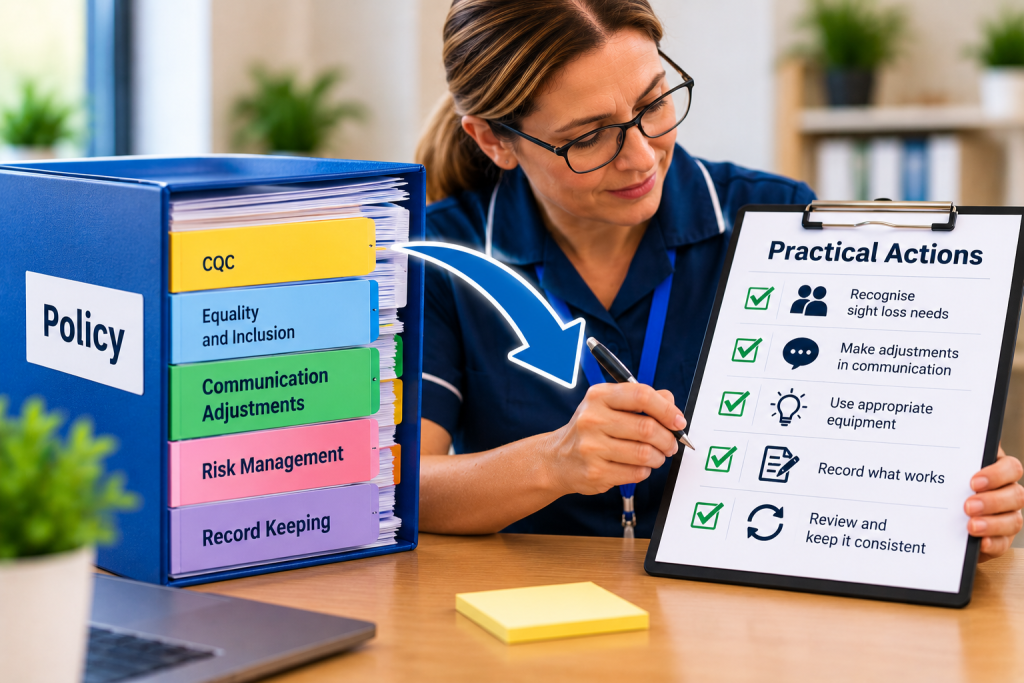
Five points to check
1. Turn principles into staff actions
If a policy promises accessible communication, explain how staff identify the required format, where they record it and what happens before information is sent.
2. Use realistic sensory scenarios
Examples such as inaccessible appointment letters, difficulty identifying packaging or an obstructed familiar route help staff translate policy into decisions.
3. Name responsibility at each stage
Clarify who identifies needs, updates records, arranges adjustments and checks implementation. Avoid a policy where everyone is responsible but nobody owns the action.
4. Link policy to working tools
Reference the actual assessment fields, care-plan sections, incident forms, accessible-information process and referral pathways staff are expected to use.
5. Test whether the policy answers a real problem
Ask a worker what they would do if a person could no longer read correspondence or locate items safely. If the policy cannot guide the response, it needs more practical detail.
What useful evidence can look like
Useful evidence connects the identified need, the action taken, who was responsible, what happened in practice and the outcome for the person. It should be clear enough for another member of staff to understand and use.
- Need: What was identified and how did it affect the person?
- Action: What practical support or change was agreed?
- Practice: How can the service show that the action happened?
- Outcome: What difference did it make?
- Review: Is it still working and what happens next?
Ask your service: Could another member of staff understand what needs to happen from the evidence you currently hold?